
The Science of Outdoor Durability: A Material Guide to IMOBILI Sofa Sets
Introduction: The Demanding Environment of Outdoor Living
Outdoor furniture faces a relentless assault. Sunlight delivers ultraviolet radiation that breaks down polymer chains, causing colors to fade and materials to become brittle. Rain and humidity introduce moisture that corrodes metal frames and promotes mildew growth on fabrics. Temperature fluctuations cause materials to expand and contract, stressing joints and connections. Salt air near coastal environments accelerates corrosion, while chlorine from pool water adds chemical stress. In this demanding context, the difference between furniture that lasts a single season and furniture that performs for years comes down to one thing: material science.
Understanding the materials that constitute high-performance outdoor furniture is essential for making informed purchasing decisions. This guide examines the key materials used in IMOBILI's sofa sets, explaining the science behind their durability and why these specifications matter for long-term performance. From UV-resistant synthetic fibers to corrosion-proof metal finishes, each material choice reflects a commitment to commercial-grade durability that has been refined over twenty years of manufacturing experience.This experience forms the foundation of the IMOBILI brand story.
PE Rattan: Engineered Material with 3000-Hour UV Certification
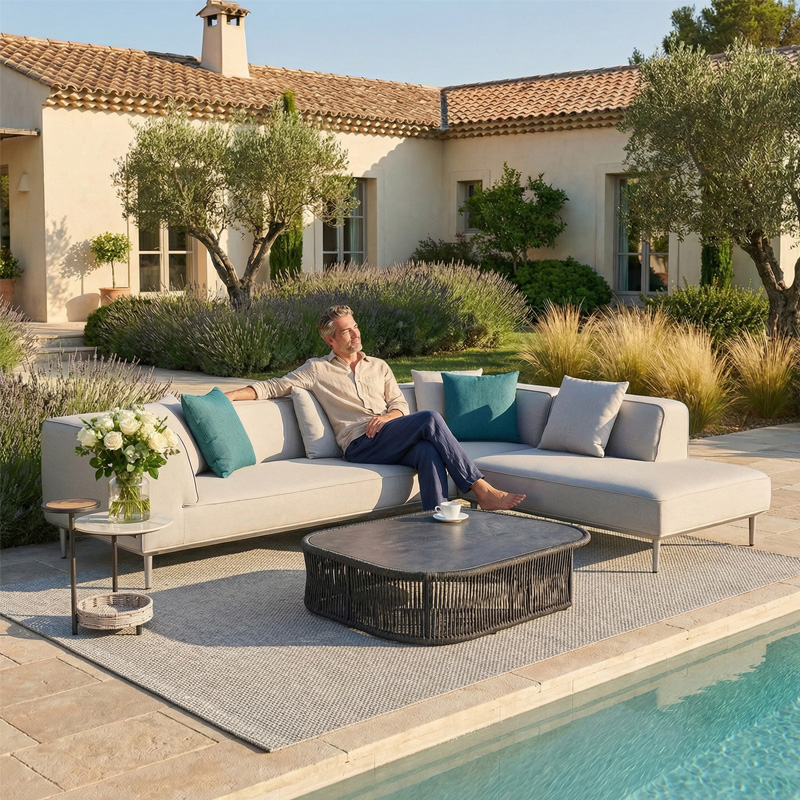
Synthetic rattan, also known as PE (polyethylene) wicker, has become the material of choice for premium outdoor furniture. Its appeal lies in its ability to replicate the organic texture of natural rattan while offering vastly superior durability. Natural rattan, though beautiful, is susceptible to moisture damage, UV degradation, and pest infestation. PE rattan eliminates these vulnerabilities through engineered material formulation.
The key specification that distinguishes premium PE rattan from lower-grade alternatives is UV resistance measured in hours of exposure. IMOBILI uses PE rattan that has passed 3,000 hours of UV testing, a standard that separates commercial-grade materials from residential-grade products. To put this in perspective, many synthetic rattan products on the market are tested to only 500 or 1,000 hours. The 3,000-hour benchmark indicates that the material has been formulated with UV stabilizers and color masterbatches that prevent the polymer chains from breaking down under prolonged sunlight exposure.These materials are put to the test in our Sauna and Nordic Breeze collections.
Antimicrobial and Environmental Properties
Beyond UV resistance, premium PE rattan offers several additional performance characteristics. The material is inherently antimicrobial, resisting the growth of mold and mildew that can occur in damp outdoor environments. This property is particularly valuable in humid climates where organic materials would quickly degrade. The material is also fully recyclable, aligning with sustainability considerations in furniture manufacturing.
Through-Color Technology for Lasting Appearance
The extrusion process used to create PE rattan fibers incorporates color throughout the material rather than applying it as a surface coating. This through-color technology ensures that any wear or abrasion does not reveal an underlying color mismatch. Surface coatings eventually wear away, exposing the natural color of the base polymer, but through-color fibers maintain their appearance even after years of use and cleaning.
Polyester Fabric: Balancing Color Stability and Abrasion Resistance
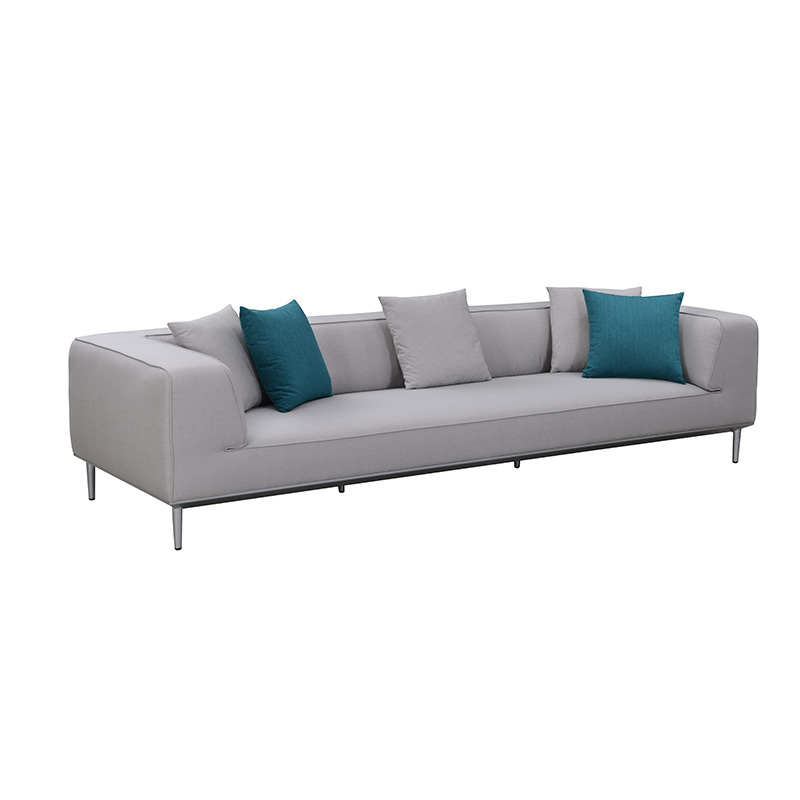
The upholstery fabric used on outdoor furniture cushions must satisfy a demanding set of requirements. It must resist fading from UV exposure, repel water without trapping moisture, resist staining from food and beverages, and withstand the abrasion of regular use. Polyester fabrics, when engineered for outdoor applications, meet these requirements effectively.
IMOBILI's cushion fabrics are specified to the same 3,000-hour UV resistance standard as the PE rattan. This ensures that the color of the upholstery remains consistent with the woven elements over years of outdoor exposure. Fade resistance in textiles is achieved through a combination of fiber chemistry and dyeing processes. Solution-dyed fibers, where the color pigment is incorporated during the extrusion of the fiber itself, provide superior colorfastness compared to piece-dyed fabrics where color is applied after the fabric is woven.
Water Repellency and Quick-Dry Properties
The fabric's resistance to moisture is equally important for outdoor durability. Fabrics that absorb water become heavy, slow to dry, and susceptible to mildew growth. The polyester fibers used in IMOBILI's cushions are engineered to be water-repellent, causing water to bead on the surface rather than penetrating the fabric. This property, combined with breathability, allows the cushions to dry quickly after rain or cleaning, reducing the risk of mold formation.
Powder Coating: The Protective Barrier for Metal Frames
The structural frame of any outdoor sofa must provide stable support while resisting corrosion from moisture and environmental exposure. Aluminum is a preferred material for this purpose due to its inherent resistance to rust. However, aluminum can still oxidize and degrade when exposed to salt air or chlorinated water. Powder coating provides the protective barrier that prevents this degradation.
The Powder Coating Process Explained
Powder coating differs fundamentally from liquid paint application. The coating material is applied as a dry powder that is electrostatically charged and sprayed onto the metal surface. The charged particles adhere to the metal, and the piece is then cured in an oven where the powder melts, flows, and forms a continuous film. This process creates a finish that is significantly more durable than conventional paint, with resistance to chipping, scratching, and peeling.
Polyester-Based Formulations for Outdoor Use
The performance of powder coating depends on the formulation of the powder and the quality of the application process. Polyester-based powder coatings, such as those used on IMOBILI's furniture, are specifically formulated for outdoor applications. These coatings provide excellent resistance to UV degradation, preventing the yellowing or chalking that can occur with inferior finishes. Salt spray testing to 1,000 hours is a standard benchmark for outdoor-grade powder coatings, ensuring that the protection remains effective even in coastal environments.
Premium Teak: Natural Oils Delivering Climate Stability
Natural wood brings warmth and organic texture to outdoor furniture that synthetic materials cannot replicate. However, not all wood species are suitable for outdoor use. Most hardwoods will rot, crack, or warp when exposed to moisture and temperature fluctuations. Teak stands apart as an exception, with properties that make it one of the most durable materials available for outdoor furniture.
The Role of Natural Oils in Weather Resistance
Teak's durability stems from its high natural oil content. The wood contains oils that make it inherently water-resistant, preventing the moisture absorption that causes other woods to swell, crack, and decompose. This same oil content provides resistance to fungal attack and pest infestation, two common causes of wood failure in outdoor environments. The dense grain structure of teak further enhances its stability, minimizing the expansion and contraction that occurs with temperature and humidity changes.
Sourcing and Maintenance Considerations
IMOBILI selects teak from responsible sources, ensuring the quality and sustainability of this premium material. Over time, untreated teak develops a silver-gray patina that many owners find attractive. This natural aging process does not compromise the wood's structural integrity; the silver-gray surface is a surface oxidation layer, while the wood beneath retains its strength and oil content. For those who prefer to maintain the golden-brown color of new teak, periodic oiling can preserve the original appearance.
High-Resilience Foam: Commercial-Grade Comfort Support
Comfort in outdoor seating depends largely on the cushion filling. Low-density foams feel soft initially but quickly compress and lose their supportive properties under repeated use. High-resilience foam, specified to commercial-grade standards, maintains its shape and cushioning performance even with heavy use.
Rebound Rate and Density Specifications
High-resilience foam is characterized by its ability to return to its original shape after compression. This property, often measured as the foam's rebound rate, ensures that the cushion provides consistent support over years of use. Standard foam densities for premium outdoor cushions range from 24D to 30D, with higher numbers indicating greater density and durability. The foam used in IMOBILI's cushions is specified to meet the performance requirements of contract-grade furniture, where daily use is frequent and long-term durability is essential.
Protective Construction for Extended Life
The performance of the foam is further supported by the cushion construction. The foam insert is typically wrapped in a protective layer or encased in a film that prevents moisture penetration, preserving the foam's integrity even if the cushion cover becomes wet. The cushion covers, made from the UV-resistant polyester fabric described earlier, are designed with zippers that allow for removal and cleaning, extending the useful life of the cushions.
Conclusion: Identifying Commercial-Grade Materials in Outdoor Furniture
When evaluating outdoor furniture, the material specifications provide the most reliable indicators of durability. Products that use PE rattan with 3,000-hour UV certification, powder-coated aluminum frames with documented salt spray resistance, and high-resilience foam with specified density ratings are engineered for longevity. These specifications reflect a level of investment in quality that translates directly into performance.
IMOBILI has built its reputation on these material standards. Every sofa set produced draws on twenty years of manufacturing experience and a deep understanding of how materials perform under outdoor conditions. The brand's materials are selected not for their initial appearance alone but for their proven ability to withstand the environmental challenges that outdoor furniture faces. See how this material philosophy translates into furniture for hotels, resorts, and high-traffic spaces.This commitment to material science is a defining characteristic of the brand, distinguishing its products from those that prioritize cost over durability.
For customers who value furniture that will maintain its appearance and performance across seasons and years, understanding these material specifications provides a reliable guide to quality. The 3,000-hour UV test, the powder-coated frame, the high-resilience foam—these are not marketing terms but measurable standards that indicate genuine commercial-grade construction. IMOBILI's adherence to these standards represents a commitment to lasting value that is the foundation of the brand's reputation.Beyond durability, explore the design aesthetic that brings these materials to life.